
French Bulldogs in Liverpool: a guide
This page is general information for owners. It is not veterinary advice. If you're worried about your dog's health, speak to your vet.
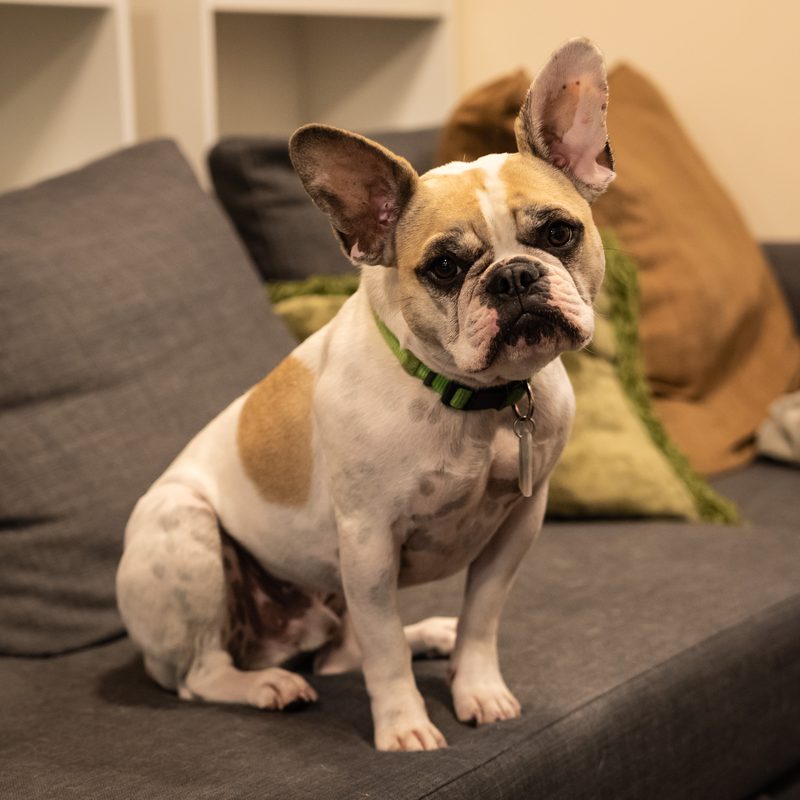
Got a French Bulldog, or thinking of getting one? Here's what trusted sources say about these bat-eared companions, including the health questions every Frenchie owner should know about, along with some friendly tips for life with one in Liverpool.
At a glance
- What they are: a companion dog in the Utility group. The Royal Kennel Club says the breed's roots go back to the Toy Bulldogs taken to northern France by Nottingham lace makers in the 1800s. The French Bulldog Club of England was formed in 1902, and the Kennel Club recognised the breed in 1906 (Royal Kennel Club). PDSA says they were bred as a companion breed, so they're very people-orientated (PDSA).
- Size: small. The breed standard gives an ideal weight of 12.5kg for dogs and 11kg for bitches, but it's a guide, and an individual dog may be larger or smaller (Royal Kennel Club breed standard). PDSA gives an average height of 30cm (PDSA).
- Lifespan: the Royal Kennel Club and PDSA both say over 10 years (Royal Kennel Club) (PDSA). Battersea gives a much lower range of 4 to 10 years, and says health problems can shorten their lives (Battersea).
- Exercise: up to an hour a day (Royal Kennel Club). PDSA suggests splitting it into a few shorter walks, with time to sniff and play off-lead in a secure area (PDSA). Dogs Trust says they might not manage tough exercise like long walks or hikes (Dogs Trust).
- Coat: fine, smooth, short and close (Royal Kennel Club breed standard). PDSA says a weekly brush should be enough (PDSA). The breed standard colours are brindle, fawn and pied (Royal Kennel Club breed standard).
- Breathing (BOAS): French Bulldogs are a flat-faced (brachycephalic) breed. Battersea says they commonly suffer from brachycephalic obstructive airway syndrome (BOAS), caused by their flat faces and narrowed airways. Dogs may overheat, tire quickly, struggle with exercise, or find it hard to breathe even at rest. Surgery can help some dogs, but BOAS can't be cured (Battersea). The Royal Kennel Club recommends breeders use its Respiratory Function Grading scheme for BOAS as a minimum (Royal Kennel Club), and the breed standard says dogs showing respiratory distress or making excessive breathing noise are unacceptable (Royal Kennel Club breed standard). So if your Frenchie breathes noisily, it's worth raising with your vet.
- Other health points: PDSA lists luxating patellas (slipping kneecaps), dental problems from crowded teeth, eye problems including cataracts, intervertebral disc disease (back problems), skin fold dermatitis and hyperuricosuria (stones or crystals in the urine) (PDSA). Battersea adds skin allergies, ear problems, and hip and knee problems (Battersea). If you're buying a puppy, PDSA advises checking the parents have had all the necessary screening and picking a dog with a longer nose and wider nostrils (PDSA). Battersea suggests considering adoption, or a breeder who puts health before exaggerated features (Battersea). Speak to your vet about any concerns.
Personality
Every dog is an individual, so treat this as a guide to what French Bulldogs are typically like, not a promise. Dogs Trust says every French Bulldog's temperament is different (Dogs Trust).
- Clownish and affectionate: the breed standard describes the Frenchie as "full of courage, yet with clown-like qualities", with a temperament that's "vivacious, deeply affectionate, intelligent" (Royal Kennel Club breed standard). PDSA says they're often quite laid-back and happy to fit in with family life, with huge characters (PDSA).
- Clever but can be stubborn: Battersea says Frenchies can be stubborn but intelligent, and short, positive training sessions help them stay engaged (Battersea). PDSA says they're eager to please but can be strong-willed, and as a sensitive breed respond best to reward-based training started early, with clear, consistent boundaries (PDSA).
- Usually fairly quiet: PDSA says they're not known for being big barkers unless they're bored or something is wrong (PDSA).
- With children: PDSA says Frenchies are usually laid-back and adaptable, so they tend to get on well with children of all ages, but advises always supervising them so playtime doesn't get too boisterous (PDSA). Dogs Trust adds that any claim that a breed is "good with children" should be treated with caution, because it depends on the individual dog. It also advises that children and dogs should always be closely supervised by an adult, and that your dog needs a den where they can rest undisturbed (Dogs Trust).
- With other dogs and pets: PDSA says a well-socialised Frenchie should get on fine with other dogs, and suggests puppy socialisation groups. They can have a high prey drive, so they may chase unfamiliar cats and small pets, though they're usually fine with a cat they've grown up with (PDSA).
- When left alone: PDSA says Frenchies are very people-orientated, dislike being left even for short periods, and ideally need someone around most of the day. Some can't cope with less than the four-hour maximum (PDSA). Battersea says you'll need to teach them to cope with being alone, with a clear routine and gradual separation training (Battersea). PDSA recommends building up time alone gradually from puppyhood and leaving puzzle toys to keep them busy. It also says four hours is the longest any dog should routinely be left (PDSA). If you work long days, a walker or licensed day care can help. If your dog seems distressed when left, speak to your vet first.
What French Bulldogs love doing
Frenchies still love to keep busy, even if they prefer shorter walks (PDSA). Battersea says daily mental stimulation is vital, especially when exercise has to be limited because of their health or the weather (Battersea). Always watch their breathing, and stop if they're struggling (Battersea). Here are some gentle ideas.
(Ad) Product links in this section are Amazon affiliate links. We may earn a small commission if you buy, at no extra cost to you. How this works
Short, sniffy walks
PDSA suggests a few shorter walks a day with time for a good sniff around (PDSA). In summer, it recommends early mornings and later evenings rather than the hottest part of the day (PDSA). Tip: pick flat, shady routes from our dog walks and parks page, and let them set the pace.
In Liverpool: green spaces in our listings include Childwall Woods (L16), Woolton Woods & Camp Hill (L25), Croxteth Country Park (L11) and Stanley Park (L4). Dogs aren't allowed in play areas, walled gardens, picnic areas or on sports pitches (council guidance).
Try at home (Ad):
- COTOP Dog Water Bottle, 350ml (Ad) View on Amazon
- All For Paws Chill Out Cooling Bandana, Medium (Ad) View on Amazon
Food puzzles
Battersea recommends food puzzles to keep Frenchies happy when exercise is limited (Battersea), and PDSA suggests fun puzzle games that challenge them (PDSA). PDSA warns they can put on weight easily, which makes exercising and breathing harder, so count any food used as part of their daily allowance (PDSA). Tip: make sure any toy you leave them alone with can't be chewed up and swallowed.
Try at home (Ad):
- LickiMat Yoggie Pot (Ad) View on Amazon
Trick training
Battersea suggests trick training, and says short, positive sessions keep an intelligent but stubborn Frenchie engaged (Battersea). Tip: keep it short and fun, and find reward-based classes on our Liverpool dog trainers page.
In Liverpool: Fast Track Dog Training in Belle Vale (L25) runs reward-based puppy classes for puppies up to 18 weeks old at the start (Fast Track, checked 18 Oct 2026). Wag n' Waves (L24) runs reward-based puppy and adolescent classes and one-to-one sessions (Wag n' Waves, checked 18 Oct 2026).
Try at home (Ad):
- Coachi Target Stick (Ad) View on Amazon
Short play sessions
Battersea recommends short play sessions as part of their daily enrichment (Battersea), and PDSA suggests time to play off-lead in a secure area (PDSA). Tip: keep games short and calm, with plenty of breaks, especially on warm days.
In Liverpool: Wag n' Waves (L24) has an indoor soft play room you book privately, so your dog has the space to itself, with a cushioned, non-slip floor (Wag n' Waves, checked 18 Oct 2026).
Try at home (Ad):
- Petface Little Pet Talulah Turtle (Ad) View on Amazon
Meeting other dogs
PDSA suggests puppy socialisation groups to help a Frenchie gain confidence around other dogs (PDSA). Dogs Trust notes that some dogs enjoy play dates and others prefer peaceful walks (Dogs Trust). Tip: if your Frenchie loves company, a licensed day care that knows flat-faced breeds can give them friends while you're at work.
In Liverpool: Wag n' Waves (L24) runs small weekly dog socials, grouped by size, with a maximum of five dogs. Each one starts with a group walk (Wag n' Waves, checked 18 Oct 2026). For puppies, Precious Paws (L24) runs a Sunday puppy playgroup for socialisation (Precious Paws, checked 18 Oct 2026).
Try at home (Ad):
- Petface Triple Knot Rope Toy, Small (Ad) View on Amazon
Fuss and company
PDSA says Frenchies will do anything for a bit of fuss and attention, and thrive on company (PDSA). Battersea calls them affectionate, people-focused dogs (Battersea). Tip: a gentle groom or a skin-fold check can double as cuddle time.
Try at home (Ad):
- D.A.Y. Republic Rubber Grooming Mitt (Ad) View on Amazon
Living with a French Bulldog in Liverpool
Keep them cool. PDSA says flat-faced breeds can overheat and struggle to breathe very quickly, especially in warm weather, so learn the signs of heatstroke and walk early or late in summer (PDSA). Battersea also advises avoiding very cold weather (Battersea). If you're ever worried about their breathing or think they've overheated, call your vet straight away.
Careful near water. PDSA says Frenchies aren't great swimmers, so it's best to keep them on a lead near ponds and lakes (PDSA).
Watch their breathing every day. Battersea suggests watching for laboured breathing, excessive panting or struggling to keep up on walks and during play (Battersea).
Keep skin folds clean and dry. PDSA suggests cleaning the folds with damp cotton wool and drying them thoroughly (PDSA). Battersea also suggests checking folds, paws and ears often for redness, smell or discharge (Battersea). A local groomer can help with nails and baths.
Watch the waistline. PDSA says Frenchies can put on weight easily, and that extra weight makes breathing harder (PDSA).
Start training early. Look for reward-based classes on our Liverpool dog trainers page.
Out at work all day? A licensed day care or a midday visit can make a real difference. Browse our Liverpool dog day care page, where we show council licence numbers wherever they exist.
Local help
Barkers Liverpool in Garston (L19) lists a French Bulldog groom on its own booking page (checked 18 Oct 2026). See all dog groomers, trainers, day care and vets in Liverpool.
Share your French Bulldog
Got a Liverpool French Bulldog? We'd love to see them! Share your photos with us on Instagram @happydogliverpool.
See all our dog breed guides, A to Z
This page contains affiliate links, marked "View on Amazon" or 🛒. Affiliate disclosure. This guide is general information, not veterinary advice. Always speak to your vet.