
Jackapoos in Liverpool: a guide
This page is general information for owners. It is not veterinary advice. If you're worried about your dog's health, speak to your vet.
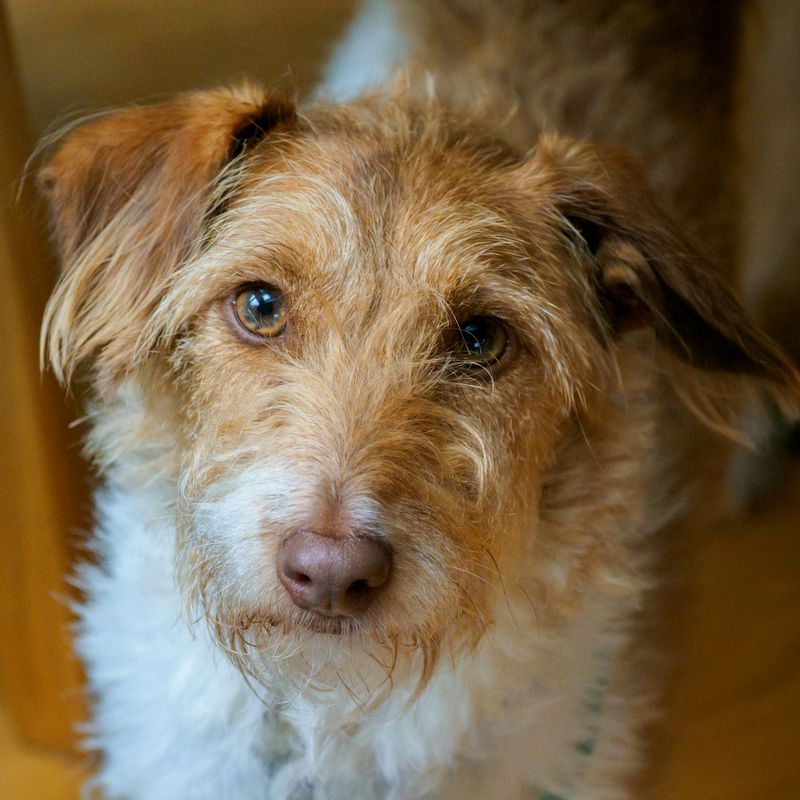
Got a Jackapoo, or thinking of getting one? There's very little reliable information written about Jackapoos themselves, so this page looks at what trusted sources say about the two parent breeds, along with some friendly tips for life with one in Liverpool.
At a glance
- What they are: a cross between a Jack Russell Terrier and a Poodle. The Royal Kennel Club defines a crossbreed as a dog whose parents are two different breeds, and says crossbreeds often show a mixture of their parents' traits, which can combine in lots of different ways (Royal Kennel Club). Unlike the Jack Russell (Royal Kennel Club: Jack Russell Terrier) and the Poodle (Royal Kennel Club: Toy Poodle), the Jackapoo isn't one of the breeds in the Royal Kennel Club's Breeds A to Z, so there's no breed standard to go by.
- Size: it depends on the parents. The Jack Russell Terrier standard gives a height of 25 to 30cm (Jack Russell Terrier breed standard). Toy Poodles should be under 28cm (Toy Poodle breed standard), and Miniature Poodles 28 to 38cm (Miniature Poodle breed standard). Meeting the parents is the best guide.
- Lifespan: we couldn't find a reliable figure for Jackapoos. For the parent breeds, the Royal Kennel Club gives over 10 years for the Jack Russell (Royal Kennel Club: Jack Russell Terrier) and over 12 years for Toy and Miniature Poodles (Royal Kennel Club: Toy Poodle) (Royal Kennel Club: Miniature Poodle).
- Exercise: the Royal Kennel Club lists up to an hour a day for both the Jack Russell and the Toy and Miniature Poodle (Royal Kennel Club: Jack Russell Terrier) (Royal Kennel Club: Toy Poodle) (Royal Kennel Club: Miniature Poodle). Battersea says Jack Russells need at least an hour, can get bored quickly without it, and that owners often underestimate how much a small dog needs (Battersea: Jack Russell).
- Coat: it can take after either parent. Jack Russells have a smooth, broken or rough coat (Jack Russell Terrier breed standard) and shed (Royal Kennel Club: Jack Russell Terrier), while the Royal Kennel Club lists Poodles as non-shedding with grooming needed every day (Royal Kennel Club: Toy Poodle). PDSA says Poodle crosses shed less, but curly coats are more prone to knots and tangles, especially when wet, so brushing a few times a week helps (PDSA).
- Health: a crossbreed can inherit conditions from either side. PDSA lists luxating patellas (slipping kneecaps), primary lens luxation, late onset ataxia, spinocerebellar ataxia and Legg-Perthes disease among the conditions Jack Russells may develop (PDSA: Jack Russell). The Royal Kennel Club recommends Jack Russell breeders DNA test for primary lens luxation and the two ataxias (Royal Kennel Club: Jack Russell Terrier), and Toy Poodle breeders DNA test for progressive retinal atrophy (prcd-PRA) (Royal Kennel Club: Toy Poodle). It advises asking what breed-associated health tests both parents have had (Royal Kennel Club). Speak to your vet about any concerns.
Personality
Every dog is an individual, and with a crossbreed that's doubly true. Temperament varies with the parents, so treat this as a guide to the two parent breeds, not a promise about any one Jackapoo. Knowing the mix may help tell you more about what a dog might be like (Royal Kennel Club), and meeting the parents is the best way to get a feel for your puppy.
- Two different backgrounds: Jack Russells were bred to work alongside foxhounds, driving foxes out of their dens, and Battersea says that determination is still common in the breed (Battersea: Jack Russell). Their breed standard describes them as "bold, fearless, friendly and confident" (Jack Russell Terrier breed standard). The Poodle was bred in Germany as a water retriever for duck hunters (Royal Kennel Club: Miniature Poodle), and its standard calls it "gay-spirited and good-tempered" (Miniature Poodle breed standard).
- Clever and lively: Battersea says Jack Russells are very smart and highly trainable, but can become destructive and frustrated without enough exercise, training and mental stimulation (Battersea: Jack Russell). PDSA says they respond well to positive, reward-based training from a young age and pick up new commands easily (PDSA: Jack Russell).
- Chasing, digging and barking: Battersea says Jack Russell instincts for chasing, digging and barking take ongoing management (Battersea: Jack Russell). PDSA says they have a very high prey drive, and that you'll need a secure garden because they can squeeze through the smallest gap (PDSA: Jack Russell). A Jackapoo may or may not inherit these traits.
- First-time owners: sources disagree about the Jack Russell side. PDSA says Jack Russells are clever and love people, which makes them a popular choice for first-time owners (PDSA: Jack Russell). Battersea describes a demanding breed, best suited to active households with time for daily training and exercise (Battersea: Jack Russell).
- With children: Battersea says Jack Russells can be playful, energetic family dogs, but may nip when excited or frustrated if they haven't learnt impulse control, and suit children who are confident around lively dogs (Battersea: Jack Russell). PDSA says they suit families with slightly older children (PDSA: Jack Russell). Dogs Trust adds that any claim that a breed is "good with children" should be treated with caution, because it depends on the individual dog. It also advises that children and dogs should always be closely supervised by an adult, and that your dog needs a den where they can rest undisturbed (Dogs Trust).
- With other dogs and pets: Battersea says some Jack Russells find interactions with other dogs challenging, and careful, positive socialisation from a young age helps (Battersea: Jack Russell). Because of their prey drive, PDSA wouldn't recommend Jack Russells with smaller pets (PDSA: Jack Russell).
- When left alone: PDSA says Jack Russells are very people-orientated and can suffer separation anxiety, so they need to learn it's OK to be alone, and never for more than four hours (PDSA: Jack Russell). Battersea says building up alone time gradually, alongside meeting their exercise needs, usually helps (Battersea: Jack Russell). PDSA recommends building up time alone gradually from puppyhood and leaving puzzle toys to keep them busy. It also says four hours is the longest any dog should routinely be left (PDSA). If you work long days, a walker or licensed day care can help. If your dog seems distressed when left, speak to your vet first.
What Jackapoos love doing
Every Jackapoo is different, but these ideas draw on what sources say the parent breeds enjoy. PDSA suggests a couple of walks a day for Jack Russells, with lots of time for sniffing and exploring, time off-lead in a secure area, plus playtime and training (PDSA: Jack Russell). Here are some ideas.
(Ad) Product links in this section are Amazon affiliate links. We may earn a small commission if you buy, at no extra cost to you. How this works
Tug and toy games
Battersea says Jack Russells are highly toy-motivated and love a good game of tug, but need the right outlets for their energy (Battersea: Jack Russell). Tip: use games as rewards in training, and teach a "drop" so the game ends calmly.
In Liverpool: Wag n' Waves (L24) has an indoor soft play room you book privately, so your dog has the space to itself, with a cushioned, non-slip floor (Wag n' Waves, checked 18 Oct 2026).
Try at home (Ad):
- Tug-E-Nuff Fauxtastic Bungee Tug (Ad) View on Amazon
Sniffing and exploring
PDSA recommends walks with lots of time for sniffing and exploring (PDSA: Jack Russell). Tip: with a possible terrier prey drive, keep them on the lead unless you're somewhere secure and their recall is reliable. Our dog walks and parks page has ideas.
In Liverpool: green spaces in our listings include Childwall Woods (L16), Woolton Woods & Camp Hill (L25), Croxteth Country Park (L11) and Stanley Park (L4). Dogs aren't allowed in play areas, walled gardens, picnic areas or on sports pitches (council guidance).
Try at home (Ad):
- Total Pet 10m Waterproof Long Line (Ad) View on Amazon
Chase and fetch
PDSA says Jack Russells love to run and chase (PDSA: Jack Russell), and the Poodle side has a retrieving background (Royal Kennel Club: Miniature Poodle). Tip: a ball or toy to chase gives that instinct a safe outlet. Find open space on our walks and parks page.
In Liverpool: council parks in our listings with plenty of room include Sefton Park (L17), Croxteth Country Park (L11), Walton Hall Park (L4) and Newsham Park (L6). Dogs aren't allowed in play areas, walled gardens, picnic areas or on sports pitches (council guidance).
Try at home (Ad):
- Air KONG Squeaker Balls, Small (Ad) View on Amazon
A place to dig
Battersea says digging is a particular favourite for Jack Russells, because it's genuinely rewarding for a breed bred to do exactly that (Battersea: Jack Russell). Tip: a digging box or a corner of the garden with toys buried in it gives them a place where digging is allowed.
Try at home (Ad):
- ZippyPaws Zippy Burrow, Soup Dumplings (Ad) View on Amazon
Flyball, agility and training classes
PDSA says Jack Russells often do really well at canine sports like flyball and agility (PDSA: Jack Russell). Crossbreeds can join the Royal Kennel Club's Activity Register, which covers agility, flyball, obedience, rally and more (Royal Kennel Club). The Royal Kennel Club recommends dogs don't start on agility equipment until they're at least a year old (Royal Kennel Club). Tip: find a class on our Liverpool dog trainers page.
In Liverpool: Precious Paws (L24) runs a four-week Agility & Hoopers Foundation course for puppies under one year (Precious Paws, checked 18 Oct 2026). Wag n' Waves (L24) runs reward-based puppy and adolescent classes and one-to-one sessions (Wag n' Waves, checked 18 Oct 2026).
Try at home (Ad):
- Lanjue Dog Treat Pouch, 2 pack (Ad) View on Amazon
Brain games
Battersea says Jack Russells need mental stimulation as well as exercise (Battersea: Jack Russell), and PDSA recommends puzzle toys and enrichment feeders to keep dogs busy when they're left (PDSA). Tip: make sure any toy you leave them alone with can't be chewed up and swallowed.
In Liverpool: Precious Paws (L24) runs owner workshops that include scent work (Precious Paws, checked 18 Oct 2026).
Try at home (Ad):
- KONG Wobbler, Small/Medium (Ad) View on Amazon
Living with a Jackapoo in Liverpool
Plan for an hour or more a day. Small doesn't mean low-energy (Battersea: Jack Russell). Mix walks with games and training. Our dog walks and parks page has ideas. Always check the signs for lead rules and any areas where dogs aren't allowed.
Check your fences. PDSA says Jack Russells can squeeze through the smallest gap, so make sure your garden is secure (PDSA: Jack Russell).
Groom for the coat you've got. A smooth Jack Russell-type coat may only need a weekly brush (PDSA: Jack Russell). A curlier Poodle-type coat may need brushing a few times a week and some owners prefer a shorter clip (PDSA). PDSA advises not tackling matts at home, and choosing a reputable groomer, for example a member of a trade body such as the Pet Industry Federation (PDSA). Find one on our Liverpool dog groomers page.
Muddy walks happen. If they just get muddy on a walk, PDSA suggests rinsing them in warm water rather than using shampoo (PDSA).
Start training early. Look for reward-based classes on our Liverpool dog trainers page.
Out at work all day? A licensed day care or a midday walk can make a real difference. Browse our Liverpool dog day care page, where we show council licence numbers wherever they exist.
Local help
Barkers Liverpool in Garston (L19) lists a Jack Russell and small crossbreed groom on its own booking page (checked 18 Oct 2026). See all dog groomers, trainers, day care and vets in Liverpool.
Share your Jackapoo
Got a Liverpool Jackapoo? We'd love to see them! Share your photos with us on Instagram @happydogliverpool.
See all our dog breed guides, A to Z
This page contains affiliate links, marked "View on Amazon" or 🛒. Affiliate disclosure. This guide is general information, not veterinary advice. Always speak to your vet.