
Labradors in Liverpool: owner's guide
This page is general information for owners. It is not veterinary advice. If you're worried about your dog's health, speak to your vet.
Got a Labrador, or thinking of getting one? Here's what trusted sources say about the UK's best-known gundog, along with some friendly tips for life with one in Liverpool.
At a glance
- What they are: a gundog from the Retriever group. The Royal Kennel Club says the breed traces back to Newfoundland, where dogs helped fishermen retrieve nets and lines. Dogs brought back to England were valued for their retrieving skills, the Earl of Malmesbury gave the breed its name, and the first breed club was founded in 1916 (Royal Kennel Club).
- Size: large. The breed standard gives an ideal height of 56 to 57cm for dogs and 55 to 56cm for bitches, but says it's a guide, and an individual dog may be larger or smaller (Royal Kennel Club breed standard). PDSA gives an average weight of 25 to 35kg (PDSA).
- Lifespan: over 10 years (Royal Kennel Club); Dogs Trust says typically 10+ years (Dogs Trust).
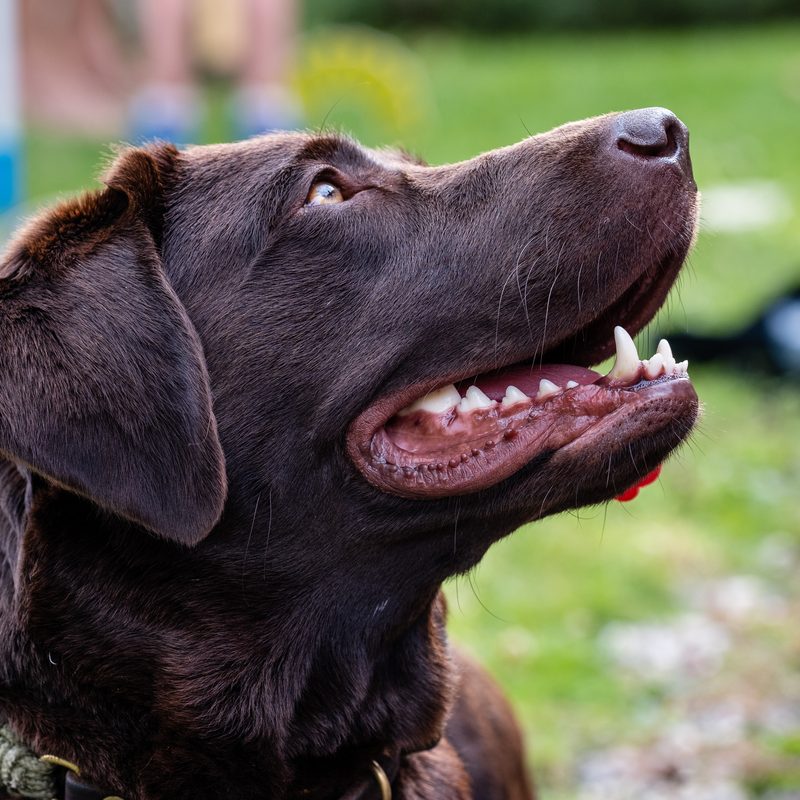
- Colours: wholly black, yellow or liver/chocolate. Yellows range from light cream to fox red (Royal Kennel Club breed standard).
- Exercise: the Royal Kennel Club lists more than 2 hours a day (Royal Kennel Club). Guide Dogs says adults generally need at least 90 minutes a day, preferably in two sessions, on and off the lead (Guide Dogs). Young dogs may do better with a few shorter walks rather than one long one (Dogs Trust).
- Coat: short and dense with a weather-resistant undercoat (Royal Kennel Club breed standard). Labradors do shed, and the Royal Kennel Club suggests grooming once a week (Royal Kennel Club).
- Health: PDSA lists hip dysplasia, elbow dysplasia, a tendency to obesity and progressive retinal atrophy (PRA) among the problems Labradors can be prone to (PDSA). Guide Dogs adds atopic dermatitis (itchy skin and ear problems), exercise-induced collapse in some young adults, and bloat, which is rare but an emergency (Guide Dogs). The Royal Kennel Club recommends breeders use DNA tests including EIC, CNM and prcd-PRA, plus hip, elbow and eye screening (Royal Kennel Club). Ask to see health results for both parents (Guide Dogs), and speak to your vet about anything that worries you.
- Food lovers: Guide Dogs says Labradors are often associated with a love of food, which helps in training, but owners need to manage it to prevent stealing or over-eating (Guide Dogs).
Personality
Every dog is an individual, so treat this as a guide to what Labradors are typically like, not a promise. Dogs Trust says every Labrador's temperament is different (Dogs Trust), and the RSPCA believes much of a puppy's temperament comes from their training and upbringing, not just the breed (RSPCA).
- Good-natured and keen: the breed standard describes the Labrador as "intelligent, keen and biddable, with a strong will to please", with a "kindly nature" and as an "adaptable, devoted companion" (Royal Kennel Club breed standard). PDSA calls Labradors devoted, affectionate and loving (PDSA).
- Usually easy to train: PDSA says Labradors are obedient, quick to learn and eager to please, and recommends positive, reward-based training. Those from working lines in particular need training to fulfil their desire to work and retrieve (PDSA). Guide Dogs says they generally enjoy learning and are highly food motivated (Guide Dogs).
- Busy mouths: as retrievers, Labradors sometimes pick up things you'd rather they didn't. Guide Dogs suggests giving them an outlet with retrieving games, hide and seek and safe chew toys (Guide Dogs). Like other dogs, they need plenty of attention and stimulation so they don't get bored (Guide Dogs).
- With children: PDSA says Labradors usually bond well with the whole family and, given the right socialisation, as with all breeds, can make lovely family pets (PDSA). Guide Dogs adds that, like all dogs, they must be supervised around young children (Guide Dogs). Dogs Trust adds that any claim that a breed is "good with children" should be treated with caution, because it depends on the individual dog. It also advises that children and dogs should always be closely supervised by an adult, and that your dog needs a den where they can rest undisturbed (Dogs Trust).
- With other dogs: Guide Dogs says Labradors' sociable nature means they're likely to love meeting and playing with other dogs, but they need good recall and to greet people and dogs calmly (Guide Dogs). Dogs Trust points out that some dogs like meeting other dogs and some don't (Dogs Trust).
- When left alone: Guide Dogs says that, as with most dogs, Labradors won't thrive left on their own for long periods, and it recommends no dog is left alone for more than four hours in every 24 (Guide Dogs). PDSA recommends building up time alone gradually from puppyhood and leaving puzzle toys to keep them busy. It also says four hours is the longest any dog should routinely be left (PDSA). If you work long days, a walker or licensed day care can help. If your dog seems distressed when left, speak to your vet first.
What Labradors love doing
Labradors usually love anything that involves their people (Guide Dogs). PDSA suggests a daily mix of walking, running, retrieving, playing, sniffing and searching, and swimming, tailored to your dog (PDSA). Here are some ideas.
(Ad) Product links in this section are Amazon affiliate links. We may earn a small commission if you buy, at no extra cost to you. How this works
Fetch and retrieving games
Retrieving is what the breed was developed for, and the standard notes a "soft mouth" (Royal Kennel Club breed standard). Guide Dogs recommends retrieval games as an outlet for that instinct (Guide Dogs). Tip: find a big open space on our dog walks and parks page, and keep throws short for young puppies.
In Liverpool: council parks in our listings with plenty of room include Sefton Park (L17), Croxteth Country Park (L11), Walton Hall Park (L4) and Newsham Park (L6). Dogs aren't allowed in play areas, walled gardens, picnic areas or on sports pitches (council guidance).
Try at home (Ad):
- Chuckit! Sport 18M Ball Launcher (Ad) View on Amazon
Swimming
The breed standard mentions a "keen love of water" (Royal Kennel Club breed standard). Guide Dogs says Labradors were originally bred for swimming and retrieving, are often keen water dogs, and that swimming is excellent exercise provided it's safe for them (Guide Dogs). Tip: only let them in where it's safe and dogs are allowed. Our walks and parks page is a good place to start.
In Liverpool: Wag n' Waves in Hunts Cross (L24) has a purpose-built dog swimming pool, and first-timers start with an introductory swim with its staff (Wag n' Waves, checked 18 Oct 2026). In Sefton Park, dogs must stay out of the lakes.
Try at home (Ad):
- Gorilla Tuff Floating Training Dummy (Ad) View on Amazon
Sniffing and search games
The breed standard describes an "excellent nose" (Royal Kennel Club breed standard), and Guide Dogs notes Labradors work as search and rescue and sniffer dogs as well as guide dogs (Guide Dogs). Hide and seek is one of the games Guide Dogs suggests (Guide Dogs). Tip: hide a toy or a few treats around the house or garden and let them track it down.
In Liverpool: Precious Paws (L24) runs owner workshops that include scent work (Precious Paws, checked 18 Oct 2026).
Try at home (Ad):
- IOKHEIRA Snuffle Mat, 50 x 50cm (Ad) View on Amazon
Puzzle feeders and food games
Guide Dogs says Labradors may enjoy food-based games and puzzles, but stresses keeping an eye on calorie intake (Guide Dogs). PDSA recommends enrichment feeders such as Kong-style toys to keep dogs busy when they're left (PDSA). Tip: PDSA says Labradors are prone to obesity (PDSA), so count food used in puzzles as part of their daily allowance, and make sure any toy you leave them with can't be chewed up and swallowed.
Try at home (Ad):
- Nina Ottosson Dog Puzzle Toy, Level 3 (Ad) View on Amazon
- Snoop Treat Ball, Medium/Large (Ad) View on Amazon
Training classes and dog sports
A dog that's quick to learn and eager to please usually enjoys training (PDSA). The Royal Kennel Club's Good Citizen Dog Training scheme is non-competitive and open to owners of any fitness level (Royal Kennel Club). For agility, the Royal Kennel Club recommends dogs don't start training on equipment until they're at least a year old (Royal Kennel Club). Because hip and elbow problems can affect the breed (PDSA), check with your vet before starting high-impact sports. Tip: find a class near you on our Liverpool dog trainers page.
In Liverpool: Precious Paws (L24) runs a four-week Agility & Hoopers Foundation course for puppies under one year (Precious Paws, checked 18 Oct 2026). Wag n' Waves (L24) runs reward-based puppy and adolescent classes and one-to-one sessions (Wag n' Waves, checked 18 Oct 2026).
Try at home (Ad):
- Coachi Train & Treat Bag (Ad) View on Amazon
Playing with other dogs
Meeting and playing with other dogs can be great mental and physical stimulation for a sociable Labrador (Guide Dogs). Not every dog enjoys it, so go at your dog's pace (Dogs Trust). Tip: if your Labrador loves company, a licensed day care can give them friends while you're at work. Our walks and parks page has spots to meet other dogs.
In Liverpool: Wag n' Waves (L24) runs small weekly dog socials, grouped by size, with a maximum of five dogs. Each one starts with a group walk (Wag n' Waves, checked 18 Oct 2026). For puppies, Precious Paws (L24) runs a Sunday puppy playgroup for socialisation (Precious Paws, checked 18 Oct 2026).
Try at home (Ad):
- Speedy Panther Rope Toy for Large Dogs, 90cm (Ad) View on Amazon
Living with a Labrador in Liverpool
Plan for plenty of exercise. Somewhere between Guide Dogs' 90 minutes and the Royal Kennel Club's 2 hours a day is a lot of walking, so mix it up with games and sniffing. Our dog walks and parks page has ideas. Always check the signs for lead rules and any areas where dogs aren't allowed.
Brush to keep on top of shedding. PDSA says a weekly brush is usually enough to keep the coat in good condition (PDSA), and that Labradors don't usually need regular haircuts (PDSA). Guide Dogs goes further and recommends a daily grooming session, plus teeth brushing and nail trims (Guide Dogs). A local groomer can help with nails if you're unsure.
Muddy walks happen. PDSA says dogs don't usually need bathing often. If they just get muddy on a walk, rinse them in warm water (PDSA).
Watch the waistline. With a breed prone to obesity (PDSA), it helps to check your dog's body condition regularly. Dogs Trust explains how, and suggests asking your vet if you're not sure (Dogs Trust).
Start training early. Look for reward-based classes on our Liverpool dog trainers page.
Out at work all day? A licensed day care or a midday walk can make a real difference. Browse our Liverpool dog day care page, where we show council licence numbers wherever they exist.
Local help
Barkers Liverpool in Garston (L19) lists a Labrador groom on its own booking page (checked 18 Oct 2026). See all dog groomers, trainers, day care and vets in Liverpool.
Share your Labrador
Got a Liverpool Labrador? We'd love to see them! Share your photos with us on Instagram @happydogliverpool.
See all our dog breed guides, A to Z
This page contains affiliate links, marked "View on Amazon" or 🛒. Affiliate disclosure. This guide is general information, not veterinary advice. Always speak to your vet.