
Spanish Water Dogs in Liverpool
This page is general information for owners. It is not veterinary advice. If you're worried about your dog's health, speak to your vet.
Got a Spanish Water Dog, or thinking of getting one? Here's what trusted sources say about these curly-coated, clever all-rounders, along with some tips for life with one in Liverpool.
At a glance
- What they are: an ancient working breed from the Iberian Peninsula, known at home as the Perro de Agua Español. The Royal Kennel Club says it was traditionally used as a waterfowl retriever and herding dog, and also helped hunters and fishermen (Royal Kennel Club). In the UK it's in the Gundog group (PDSA).
- A rare breed here: the Spanish Water Dog Club says there are approximately 2,000 in the UK, so litters are less frequent than for better-known breeds, and reputable breeders often keep waiting lists (Spanish Water Dog Club).
- Size: medium. The breed standard gives a height of 44 to 50cm and weight of 18 to 22kg for dogs, and 40 to 46cm and 14 to 18kg for bitches. It's a guide, and an individual dog may be larger or smaller (Royal Kennel Club breed standard).
- Lifespan: over 10 years (Royal Kennel Club).
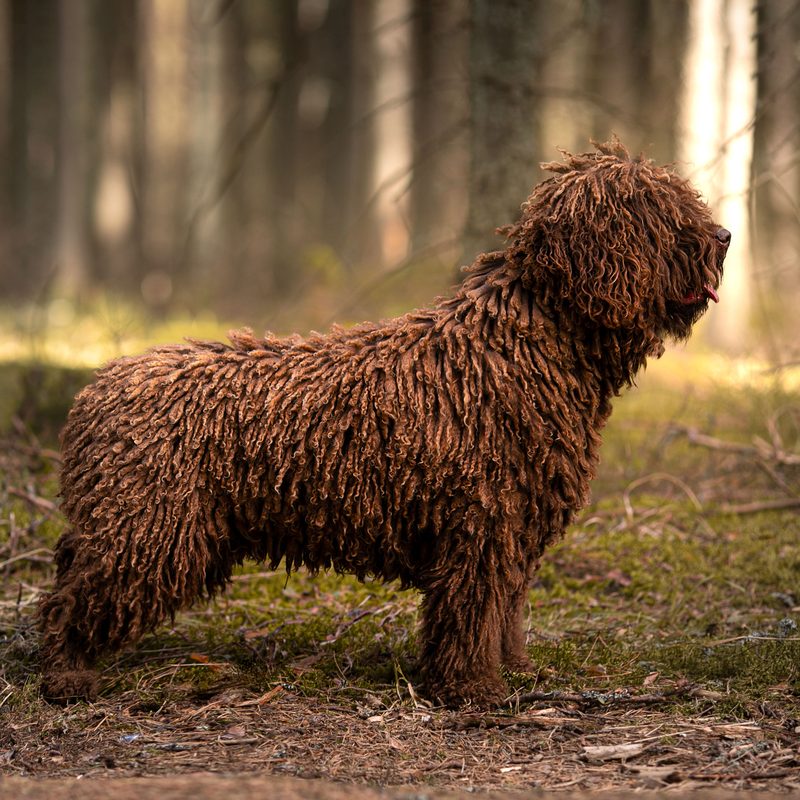
- Coat and colours: always curled and woolly, forming cords when long. It may be clipped, but to the same length all over (Royal Kennel Club breed standard). Colours are solid black, brown or white, or black or brown with white (Royal Kennel Club breed standard). The breed club notes some black or brown dogs carry a fading gene that can lighten their coat over time (Spanish Water Dog Club). The Royal Kennel Club lists the breed as non-shedding (Royal Kennel Club).
- Exercise: sources differ slightly. The Royal Kennel Club lists up to 1 hour a day (Royal Kennel Club), while the Spanish Water Dog Club says at least an hour a day, and more if possible (much less for puppies), with mental exercise as well as physical (Spanish Water Dog Club). PDSA also says around an hour (PDSA).
- Health: PDSA lists hip dysplasia and progressive retinal atrophy (PRA) among the problems the breed can be prone to (PDSA). The Royal Kennel Club recommends breeders use a DNA test for prcd-PRA and eye testing (including gonioscopy) as a minimum, with DNA tests for congenital hypothyroidism with goitre (CHG) and neuroaxonal dystrophy (NAD), plus hip scoring, as best practice (Royal Kennel Club). The breed club says reputable breeders should be able to give you copies of the parents' health results, and that two bobtailed dogs shouldn't be bred together because of the risk of spinal problems such as spina bifida (Spanish Water Dog Club). Speak to your vet about any concerns.
Personality
Every dog is an individual, so treat this as a guide to what Spanish Water Dogs are typically like, not a promise. The breed club notes that working traits vary: some dogs show them, and others don't (Spanish Water Dog Club).
- Faithful and willing: the breed standard describes the temperament as "faithful, obedient, brave, good tempered and gay", with "great learning capability" (Royal Kennel Club breed standard). PDSA calls them very friendly, loving dogs (PDSA).
- Clever and quick to learn: the Spanish Water Dog Club says they're very intelligent, quick to pick up new skills, and "not simply lap dogs". Without physical and mental exercise, they may turn to destructive behaviour through boredom and frustration (Spanish Water Dog Club). PDSA says they're very obedient and respond well to training (PDSA).
- Working instincts: the breed club says some dogs show guarding (barking at the door or unfamiliar noises), herding (trying to round up the family) or a strong prey drive off-lead. Positive, reward-based training from puppyhood helps (Spanish Water Dog Club).
- Can be wary of new things: the club says some young dogs can be nervous in unfamiliar situations if they haven't had enough early experiences, and recommends lots of early socialisation, including to traffic, children, other dogs and noises like fireworks (Spanish Water Dog Club). PDSA also stresses training and socialisation at a young age (PDSA).
- With children: the breed club says Spanish Water Dogs are usually good with children and loyal and loving, but recommends boundaries, especially with puppies, who need plenty of undisturbed sleep. It notes the herding trait can occasionally be aimed at children (Spanish Water Dog Club). PDSA says they make excellent family pets (PDSA). Dogs Trust adds that any claim that a breed is "good with children" should be treated with caution, because it depends on the individual dog. It also advises that children and dogs should always be closely supervised by an adult, and that your dog needs a den where they can rest undisturbed (Dogs Trust).
- With other dogs and pets: PDSA says they usually get on well with other pets (PDSA). The breed club recommends socialising puppies with other dogs early (Spanish Water Dog Club).
- When left alone: the breed club says they were bred for a long day's work, so if you plan to leave them inside all day, they're probably not the dog for you (Spanish Water Dog Club). PDSA recommends building up time alone gradually from puppyhood and leaving puzzle toys to keep them busy. It also says four hours is the longest any dog should routinely be left (PDSA). If you work long days, a walker or licensed day care can help. If your dog seems distressed when left, speak to your vet first.
What Spanish Water Dogs love doing
The Spanish Water Dog Club says the breed will turn its paws to almost anything, from retrieving and agility to flyball, obedience, water work and scent work (Spanish Water Dog Club). The Spanish Water Dog Society says activities that use both mind and body suit them well (Spanish Water Dog Society). Here are some ideas.
(Ad) Product links in this section are Amazon affiliate links. We may earn a small commission if you buy, at no extra cost to you. How this works
Swimming and water work
The Royal Kennel Club says the breed has webbed feet and strong swimming ability (Royal Kennel Club), and the breed club says the coat gives buoyancy in water (Spanish Water Dog Club). Tip: only let them in where it's safe and dogs are allowed. Our walks and parks page is a good place to start.
In Liverpool: Wag n' Waves in Hunts Cross (L24) has a purpose-built dog swimming pool, and first-timers start with an introductory swim with its staff (Wag n' Waves, checked 18 Oct 2026). In Sefton Park, dogs must stay out of the lakes.
Try at home (Ad):
- High Visibility Easy Grab Dog Life Jacket, Medium (Ad) View on Amazon
Fetch and retrieving games
The breed club suggests fetch as one of the games that builds on their natural retrieving ability and gives them a mental workout (Spanish Water Dog Club). Tip: find space on our dog walks and parks page.
In Liverpool: council parks in our listings with plenty of room include Sefton Park (L17), Croxteth Country Park (L11), Walton Hall Park (L4) and Newsham Park (L6). Dogs aren't allowed in play areas, walled gardens, picnic areas or on sports pitches (council guidance).
Try at home (Ad):
- Dog & Field B-LINE Bumper Dummy (Ad) View on Amazon
Hide and seek and scent work
The breed standard mentions a well-developed sense of smell (Royal Kennel Club breed standard), and the breed club recommends hide and seek to nurture their scenting skills, and as a distraction from herding (Spanish Water Dog Club). The Spanish Water Dog Society lists scent work as well suited to the breed (Spanish Water Dog Society). Tip: start with an easy hiding place and make it harder as they get the idea.
In Liverpool: Precious Paws (L24) runs owner workshops that include scent work (Precious Paws, checked 18 Oct 2026).
Try at home (Ad):
- Snuffle Knot SnuffleSeek Scent Game (Ad) View on Amazon
Tug games
The breed club suggests training games such as tug, but warns that with puppies, overzealous games played too rough can damage their teeth and jaws (Spanish Water Dog Club). Tip: keep tug gentle with youngsters, and use it as a reward in training.
Try at home (Ad):
- RUFFWEAR Pacific Loop Tug Toy (Ad) View on Amazon
Agility, flyball and obedience
The breed club says Spanish Water Dogs take part in agility, flyball and obedience, and some owners keep the coat short for these sports (Spanish Water Dog Club). The Royal Kennel Club recommends dogs don't start on agility equipment until they're at least a year old (Royal Kennel Club). Tip: find a class on our Liverpool dog trainers page.
In Liverpool: Precious Paws (L24) runs a four-week Agility & Hoopers Foundation course for puppies under one year (Precious Paws, checked 18 Oct 2026). Wag n' Waves (L24) runs reward-based puppy and adolescent classes and one-to-one sessions (Wag n' Waves, checked 18 Oct 2026).
Try at home (Ad):
- TRIXIE Pylon Obstacle Set (Ad) View on Amazon
Varied walks
The Spanish Water Dog Society recommends walks over varied terrain (Spanish Water Dog Society). Tip: mix up your routes using our walks and parks page, and practise recall, as the breed club warns some have a strong prey drive (Spanish Water Dog Club).
In Liverpool: green spaces in our listings include Childwall Woods (L16), Woolton Woods & Camp Hill (L25), Croxteth Country Park (L11) and Stanley Park (L4). Dogs aren't allowed in play areas, walled gardens, picnic areas or on sports pitches (council guidance).
Try at home (Ad):
- ACME 211.5 Dog Whistle (Ad) View on Amazon
Living with a Spanish Water Dog in Liverpool
Don't brush the coat. Unlike many curly breeds, the Spanish Water Dog Club says you should never brush the coat, because it breaks the natural cords and makes it frizzy. If cords form, split them apart by hand down to the skin, paying attention behind the ears and on the back legs. When it's time, the coat is clipped to the same length all over, with no shaping (Spanish Water Dog Club). The Royal Kennel Club says the coat is typically clipped once or twice a year (Royal Kennel Club). PDSA's breed page takes a different line, suggesting grooming a couple of times a week plus periodic clipping and shaping by a professional groomer (PDSA). We've followed the breed club here, so if you're unsure, ask your breeder or a groomer who knows the breed. The breed club adds that the coat is a bit of a "Velcro" magnet for twigs, grass seeds and mud (Spanish Water Dog Club). Find a groomer who knows the breed on our Liverpool dog groomers page.
Bath time. The Spanish Water Dog Society suggests a mild dog shampoo, squeezing water through the coat rather than scrubbing, and letting it dry naturally (Spanish Water Dog Society).
Exercise the brain too. A good walk burns off energy, but the breed club says their minds can still be raring to go afterwards (Spanish Water Dog Club). Our dog walks and parks page has ideas.
Socialise early. Early, varied experiences help prevent nervousness (Spanish Water Dog Club). Look for reward-based puppy classes on our Liverpool dog trainers page.
Out at work all day? This breed isn't suited to being left all day (Spanish Water Dog Club). Browse our Liverpool dog day care page, where we show council licence numbers wherever they exist.
Local help
See all dog groomers, trainers, day care and vets in Liverpool.
Share your Spanish Water Dog
Got a Liverpool Spanish Water Dog? We'd love to see them! Share your photos with us on Instagram @happydogliverpool.
See all our dog breed guides, A to Z
This page contains affiliate links, marked "View on Amazon" or 🛒. Affiliate disclosure. This guide is general information, not veterinary advice. Always speak to your vet.