
Westies in Liverpool: owner's guide
This page is general information for owners. It is not veterinary advice. If you're worried about your dog's health, speak to your vet.
Got a Westie, or thinking of getting one? Here's what trusted sources say about West Highland White Terriers, along with some friendly tips for life with one in Liverpool.
At a glance
- What they are: a terrier, developed from Cairn Terrier ancestry. The Royal Kennel Club says the Malcolms of Poltalloch in Argyllshire bred a white strain of Cairns in the mid 19th century, because white dogs were easier to see when working on the moors. Early names included the Poltalloch and Roseneath terrier, and the Kennel Club recognised the breed in 1907 (Royal Kennel Club).
- Size: small. The breed standard gives a height of approximately 28cm, but it's a guide, and an individual dog may be larger or smaller (Royal Kennel Club breed standard). PDSA gives an average weight of 6 to 9kg (PDSA).
- Lifespan: over 12 years (Royal Kennel Club) (PDSA).
- Exercise: the Royal Kennel Club lists up to an hour a day (Royal Kennel Club), and PDSA says an hour, split into a couple of walks with time for sniffing, plus off-lead running in a secure area, training and playtime (PDSA). Dogs Trust says they might not manage tough exercise like long hikes (Dogs Trust).
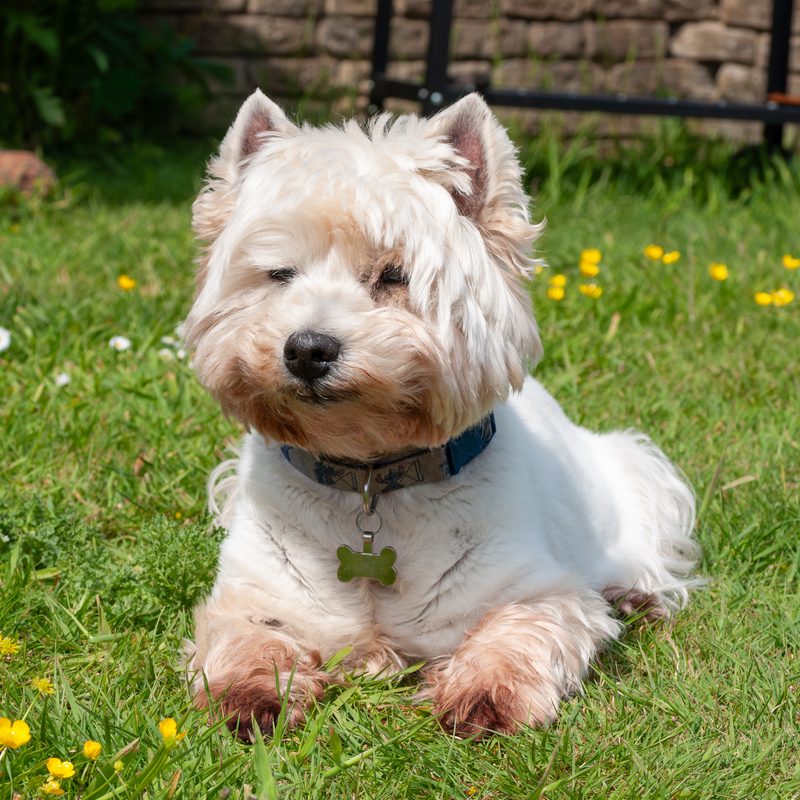
- Coat: a double coat, with a harsh outer coat about 5cm long and a short, soft undercoat, and always white (Royal Kennel Club breed standard). PDSA says it can quickly get matted, especially around the face and legs, needs brushing a few times a week, and is likely to need a professional trim as often as every six weeks (PDSA).
- Health: PDSA lists skin allergies, an inherited bone disorder of the jaw, luxating patellas (slipping kneecaps), ear conditions, eye problems including dry eye, the lung condition idiopathic pulmonary fibrosis ("Westie lung") and Legg-Perthes disease among the conditions Westies may develop (PDSA). The Royal Kennel Club says the breed doesn't currently have any recommended pre-breeding health screening, but that this may change (Royal Kennel Club). PDSA advises making sure the parents have had the relevant health checks (PDSA). Speak to your vet about any concerns.
Personality
Every dog is an individual, so treat this as a guide to what Westies are typically like, not a promise. Dogs Trust says every dog has its own personality and likes and dislikes (Dogs Trust).
- Confident and cheerful: the breed standard describes a "small, active, game, hardy" dog "possessed of no small amount of self-esteem", with a temperament that's "alert, gay, courageous, self reliant but friendly" (Royal Kennel Club breed standard). PDSA calls Westies loving and loyal, with happy, fun-loving personalities (PDSA).
- Usually eager to learn: PDSA says Westies are clever, super eager to please and respond really well to positive, reward-based training, which makes them a popular choice with first-time owners. It adds that they can be wilful, so consistency is a must (PDSA).
- Big dog attitude: PDSA says Westies tend to forget how small they are, and can be very determined and strong-willed, so socialisation and training matter so they don't feel the need to bark at bigger dogs (PDSA).
- Vocal: PDSA says that even with training, a Westie is likely to bark, and some bark just for the sake of it (PDSA).
- With children: PDSA says Westies are affectionate and playful, which makes them ideal for families with children of any age, but advises always supervising them and stopping play if it gets too boisterous (PDSA). Dogs Trust adds that any claim that a breed is "good with children" should be treated with caution, because it depends on the individual dog. It also advises that children and dogs should always be closely supervised by an adult, and that your dog needs a den where they can rest undisturbed (Dogs Trust).
- With other dogs and pets: PDSA says a Westie socialised with lots of dogs from a young age should get along fine, and suggests puppy socialisation groups so they're comfortable with dogs of all sizes. Their quite high prey drive means it wouldn't recommend keeping them with smaller pets, though they're usually fine with a cat they've grown up with (PDSA).
- When left alone: PDSA says Westies form strong bonds with their owners and often suffer separation anxiety, and if alone too long are likely to bark and may chew things (PDSA). PDSA recommends building up time alone gradually from puppyhood and leaving puzzle toys to keep them busy. It also says four hours is the longest any dog should routinely be left (PDSA). If you work long days, a walker or licensed day care can help. If your dog seems distressed when left, speak to your vet first.
What Westies love doing
PDSA says Westies are surprisingly energetic, love playtime with their owners and enjoy anything that keeps their curious minds busy (PDSA). Dogs Trust lists digging, chasing, searching and retrieving among the behaviours that come naturally to them (Dogs Trust). Here are some ideas.
(Ad) Product links in this section are Amazon affiliate links. We may earn a small commission if you buy, at no extra cost to you. How this works
Sniffing and exploring
PDSA suggests a couple of walks a day with lots of time for sniffing and exploring along the way (PDSA). Tip: let them have a good sniff. Our dog walks and parks page has ideas.
In Liverpool: green spaces in our listings include Childwall Woods (L16), Woolton Woods & Camp Hill (L25), Croxteth Country Park (L11) and Stanley Park (L4). Dogs aren't allowed in play areas, walled gardens, picnic areas or on sports pitches (council guidance).
Try at home (Ad):
- Mud Daddy 5L Portable Pet Washer (Ad) View on Amazon
Playtime with you
PDSA says Westies really enjoy lots of playtime with their owners (PDSA). Tip: a game of chase-the-toy or tug in the garden makes a good break between walks.
In Liverpool: Wag n' Waves (L24) has an indoor soft play room you book privately, so your dog has the space to itself, with a cushioned, non-slip floor (Wag n' Waves, checked 18 Oct 2026).
Try at home (Ad):
- Outward Hound Invincibles Mini Penguin (Ad) View on Amazon
Search games
Searching comes naturally to Westies (Dogs Trust), and the breed was developed to work on the moors (Royal Kennel Club). Tip: hide a toy or a few treats from their daily allowance and let them track it down.
In Liverpool: Precious Paws (L24) runs owner workshops that include scent work (Precious Paws, checked 18 Oct 2026).
Try at home (Ad):
- Dog Scent Work Tins Kit, 6 tins (Ad) View on Amazon
A place to dig
Dogs Trust lists digging among their natural behaviours (Dogs Trust), and the Royal Kennel Club says terriers were bred to pursue quarry above and below ground (Royal Kennel Club). Tip: a digging box gives them somewhere it's allowed. PDSA warns Westies like to explore and will try to get past any weakness in a fence (PDSA).
Try at home (Ad):
- Outward Hound Hide-A-Squirrel, Small (Ad) View on Amazon
Training and brain games
PDSA says Westies need training sessions to keep their minds active, and recommends accredited classes for first-time owners (PDSA). Enrichment feeders and puzzle toys can help when a dog is left for a while (PDSA). Tip: find a class on our Liverpool dog trainers page.
In Liverpool: Fast Track Dog Training in Belle Vale (L25) runs reward-based puppy classes for puppies up to 18 weeks old at the start (Fast Track, checked 18 Oct 2026). Wag n' Waves (L24) runs reward-based puppy and adolescent classes and one-to-one sessions (Wag n' Waves, checked 18 Oct 2026).
Try at home (Ad):
- TRIXIE Flip Board Activity Puzzle (Ad) View on Amazon
Meeting other dogs
PDSA suggests regular puppy socialisation groups so Westies are comfortable with dogs of all sizes (PDSA). Some dogs enjoy play dates and others prefer quieter walks (Dogs Trust). Tip: if your Westie loves company, a licensed day care that groups dogs by size can give them friends while you're at work.
In Liverpool: Wag n' Waves (L24) runs small weekly dog socials, grouped by size, with a maximum of five dogs. Each one starts with a group walk (Wag n' Waves, checked 18 Oct 2026). For puppies, Precious Paws (L24) runs a Sunday puppy playgroup for socialisation (Precious Paws, checked 18 Oct 2026).
Try at home (Ad):
- Yellow "Nervous" Lead Sleeve (Ad) View on Amazon
Living with a Westie in Liverpool
Book regular professional grooming. PDSA says what really makes Westies high maintenance is the grooming, with a professional trim likely as often as every six weeks (PDSA). Dogs Trust says around every 6 weeks (Dogs Trust). Find one on our Liverpool dog groomers page.
Check with your vet before choosing a shampoo. PDSA says Westies are known to suffer from skin allergies, so speak to your vet before buying one (PDSA). If they just get muddy on a walk, PDSA suggests rinsing them in warm water (PDSA).
Secure the garden. PDSA says a secure fence is a must, because Westies like to explore (PDSA).
Start training early. Look for reward-based classes on our Liverpool dog trainers page. Our dog walks and parks page has places to practise. Always check the signs for lead rules and any areas where dogs aren't allowed.
Out at work all day? A licensed day care or a midday walk can make a real difference. Browse our Liverpool dog day care page, where we show council licence numbers wherever they exist.
Local help
Barkers Liverpool in Garston (L19) lists a Westie groom on its own booking page (checked 18 Oct 2026). See all dog groomers, trainers, day care and vets in Liverpool.
Share your Westie
Got a Liverpool Westie? We'd love to see them! Share your photos with us on Instagram @happydogliverpool.
See all our dog breed guides, A to Z
This page contains affiliate links, marked "View on Amazon" or 🛒. Affiliate disclosure. This guide is general information, not veterinary advice. Always speak to your vet.